Projects
Research projects currently open in our group. We welcome motivated students and researchers interested in joining these efforts.
Interested in a project? Open it to find who to contact, or see Join us.
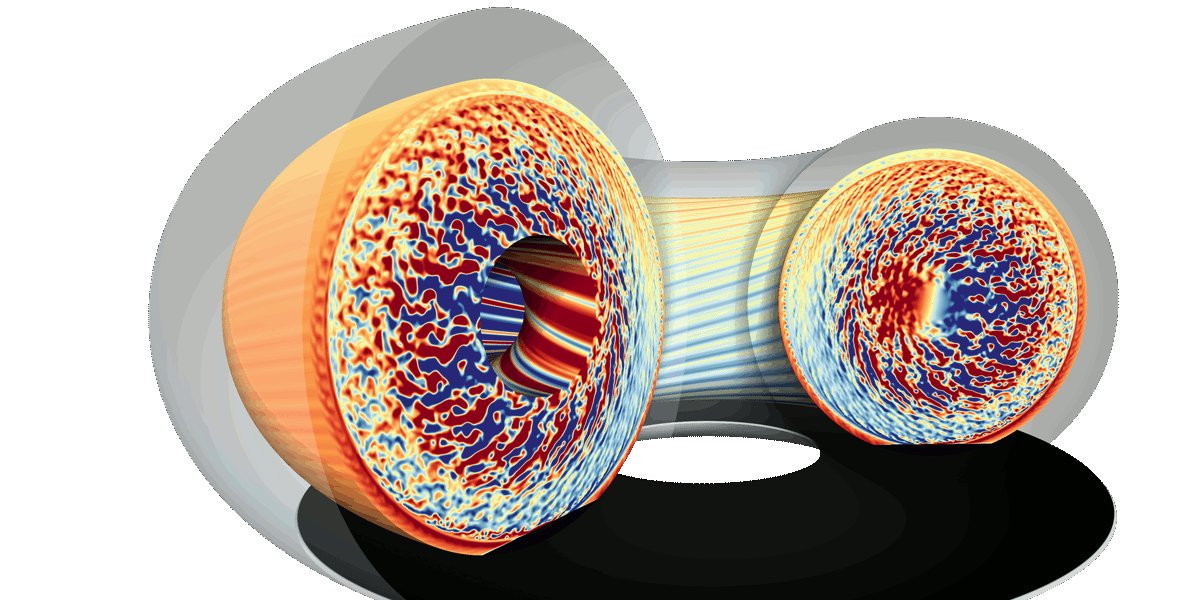
Plasma core
Energetic particles in fusion plasmas
Energetic particles heat the plasma and drive current, but they also interact with turbulence and can help suppress it. Using first-principles gyrokinetic simulations with GYSELA, this project studies how energetic particles, turbulence and modes such as EGAMs and Alfvén eigenmodes interact, and what that means for confinement.
Read the full project →
Core → edge
Impurity transport
Impurities that build up in the core dilute the fuel and radiate energy away. This project uses gyrokinetic simulations with GYSELA to find how turbulence, collisions and magnetic geometry drive impurity fluxes, peaking and redistribution for different species and operating regimes.
Read the full project →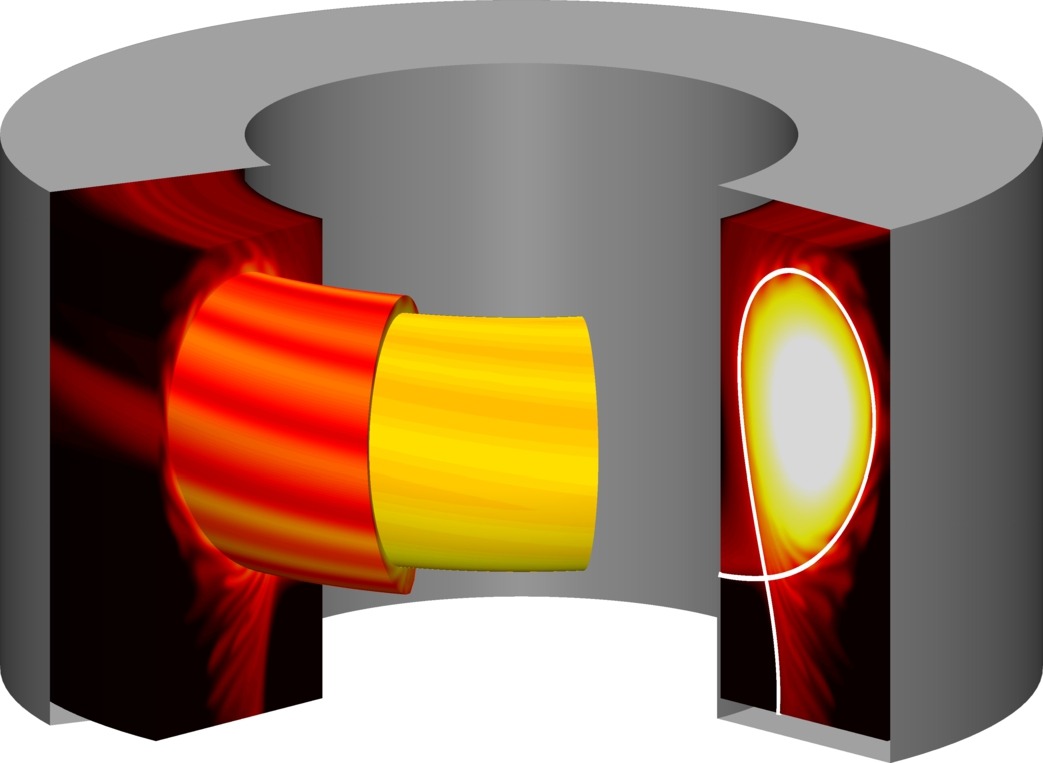
Edge, SOL & divertor
Edge plasma turbulence
Turbulence at the plasma edge sets how heat and particles reach the wall. With three-dimensional fluid modelling, this project studies edge and scrape-off-layer turbulence, detachment and exhaust, blobs, plasma–neutral interactions and alternative divertor configurations.
Read the full project →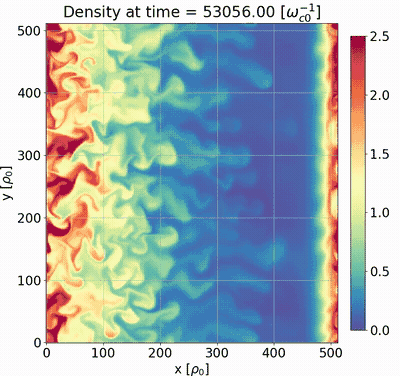
Whole plasma
Reduced transport model
Full turbulence simulations are too expensive for wide design scans. This project builds machine-learning surrogate models, including deep and physics-informed neural networks, trained on large databases of gyrokinetic simulations and discharges, to predict plasma performance in seconds.
Read the full project →